
Precision Shaft Machining for Robotics and Automation
RobotPartsCNC provides precision CNC machining for shafts used in robotics, motion control, and automation equipment. We specialize in custom shafts that meet the strict requirements of gearboxes, actuators, and drive systems, from initial prototype development through to full-scale production.
Our Shenzhen facility handles complex shaft geometries, including precision bearing fits, splines, keyways, and high-performance material heat treatment.
- ±0.01 mm
- Standard tolerance
- ±0.005 mm
- Critical bearing surfaces
- 50–500
- Low-volume units
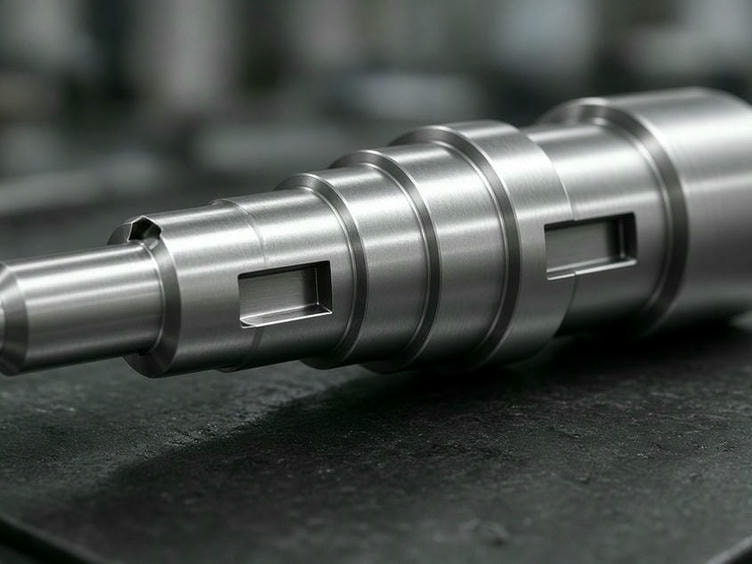
Engineered for Motion Control
Robotics and automation systems rely on shafts for power transmission and motion accuracy. Unlike general-purpose machining, manufacturing shafts for robotics requires strict adherence to geometric dimensioning and tolerancing (GD&T). We prioritize the following factors for every shaft we machine.
Bearing Seats
Precise interference or transition fits to ensure smooth rotation and load distribution.
Runout Control
Minimal Total Indicated Runout (TIR) to prevent vibration and premature wear in gearboxes.
Coaxiality
Alignment of multiple diameters and features to ensure efficient power transmission.
Surface Finish
Optimized roughness (Ra) to accommodate seals and bearings, reducing friction and heat.
Advanced Turning and Mill-Turn Capabilities
Our production floor utilizes multi-axis CNC turning and mill-turn centers. These machines perform complex operations in a single setup, which is critical for maintaining high accuracy across the length of the shaft.
CNC Turning
High-precision turning for outer diameters, tapers, and threads.
Live Tooling
Mill-turn capabilities machine keyways, cross-drilled holes, flats, and pockets on the shaft without moving the part to a separate milling machine.
Multi-Axis Machining
Enables the creation of complex features on the shaft axis in one cycle, reducing error accumulation and improving positional accuracy.
Tolerance and Geometric Control
Robotic applications often demand tolerances tighter than standard commercial parts. We regularly work to tolerances of ±0.01 mm, with capability down to ±0.005 mm for critical bearing surfaces.
Inspection verifies
- —Dimensional Accuracy: Calibrated micrometers, bore gauges, and CMMs.
- —Geometric Tolerances: Concentricity, cylindricity, and perpendicularity.
- —Surface Roughness: Testers confirm required Ra values for mating components and seal surfaces.
Materials for Robotic Transmission
The choice of material dictates the shaft's load-bearing capacity, wear resistance, and fatigue life. We machine a wide array of materials suited for robotics and automation.
| Material Group | Grades |
|---|---|
| Carbon & Alloy Steels | 1045, 4140, 4340, tool steels — high-torque applications |
| Stainless Steel | 303, 304, 316, 17-4PH — corrosion resistance and strength |
| Specialty Alloys | Titanium Grades 2 & 5 — lightweight, high-strength mobile robotics |
| Engineering Plastics | POM (Delrin), PEEK, Nylon — non-conductive or lightweight |
Grinding and Secondary Processes
For projects requiring superior surface finish and tight dimensional control, we coordinate with specialized partners to provide secondary processing.
Precision Grinding
Cylindrical grinding for final sizing of bearing journals and high-precision diameters.
Heat Treatment
Induction hardening, case hardening, or through-hardening to increase surface hardness and wear resistance for high-duty cycles.
Surface Treatments
Black oxide, electroless nickel plating, or passivating to prevent corrosion and improve longevity in harsh environments.
From Prototype to Full-Scale Production
RobotPartsCNC supports the entire product lifecycle.
Prototypes
Fast turnaround for engineering prototypes, allowing you to validate designs, bearing fits, and material choices before committing to production tooling.
Low-Volume Production
Ideal for pilot programs or specialized automation equipment where quantities range from 50 to 500 units.
Production Manufacturing
For repeat orders, we optimize machining programs and fixturing to ensure consistent quality, repeatability, and cost-effective unit pricing.
Quality Documentation and Traceability
For robotics and automation integrators, we provide the documentation necessary to meet your quality management standards. Depending on your requirements, we can provide:
- ✓Inspection Reports: Dimensional data for critical features.
- ✓Material Certificates: Mill test reports (MTRs) to verify material composition.
- ✓Certificate of Conformance (CoC): Verifying parts meet the specified drawing and standard requirements.
- ✓Lot Traceability: Records to ensure consistency across production batches.
Send your technical documentation to
info@robotpartscnc.com
Our engineering team reviews all CAD models and drawings to identify potential manufacturability issues, such as deep bores or difficult tolerances, before production begins.
Start Your Shaft ProjectRequest a Quote for Your Shaft Project
Please include the following in your inquiry so our engineering team can provide the best manufacturing advice.
- 13D CAD Model: STEP, STP, or X_T preferred.
- 22D Drawing: With clearly marked tolerances, surface finish requirements, and GD&T callouts.
- 3Material: Including any heat treatment or hardness specifications.
- 4Quantity: For both prototype and initial production runs.
- 5Application: Briefly describe the usage (e.g., robot joint, motor output, gearbox assembly).
RobotPartsCNC
Precision CNC Parts for Robotics & Automation
Prototype • Low Volume • Production