
Robotics CNC surface finishing
Precision Surface Finishing for Robotics & Automation Components
The right surface treatment does more than improve appearance. It helps protect robotic components against corrosion and wear, preserve electrical conductivity, and ensure reliable mating with other assembly parts.
RobotPartsCNC coordinates finishing from high-precision actuators to AMR structural frames, evaluating cleanroom, factory-floor, and outdoor conditions before recommending the most effective solution.
01
Finish selected around the operating environment
02
Assembly-ready parts with controlled dimensions
Technical capabilities
Special finishes matched to robotic performance requirements
We coordinate secondary processes to drawing specifications while protecting critical tolerances, threads, bores, contact surfaces, and assembly interfaces.
Plating & deposition
Electroless nickel, zinc, chrome, and hard chrome for corrosion control, hardness, low friction, and uniform coverage.
Conversion treatments
Chem film, passivation, phosphating, and black oxide for conductivity, bonding, corrosion resistance, and minimal dimensional change.
Coatings & paint
Powder coating and industrial painting for durable protection, color coding, branding, and exterior structural parts.
Mechanical finishing
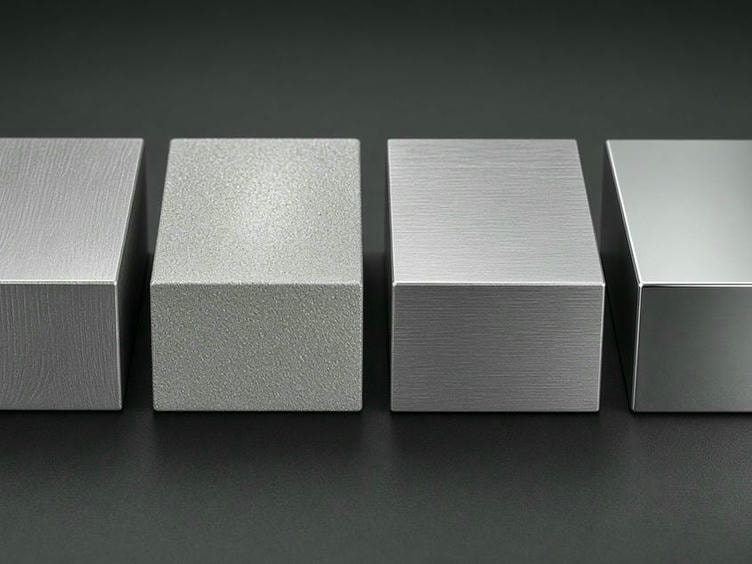
Polishing, buffing, and bead blasting to achieve specified Ra values, clean sealing surfaces, or uniform matte textures.
Finish selection guide
Select by material, function, and environment
Finish selection balances substrate material, exposure, mechanical loads, appearance, electrical requirements, and total cost. Use the options below as a starting point for your RFQ discussion.
Get an engineering recommendationWear and corrosion protection
Choose electroless nickel for uniform coverage on complex steel, aluminum, or copper geometries; zinc plating for economical indoor steel protection; chrome or hard chrome for shafts, sliding interfaces, and high-wear components; and phosphating for a conversion layer that supports corrosion protection and coating adhesion on steel.
Joints, shafts, threaded features, fixtures, and industrial mechanisms.
Metallic nickel, bright or hard chrome, zinc-toned, or dark phosphate finish.
Application planning
How operating conditions influence finish selection
Cleanroom and medical automation
Sanitization and controlled surfaces
Prioritize finishes that tolerate cleaning agents, resist corrosion, and are easy to inspect and sanitize. Stainless passivation, smooth polishing, and carefully specified coatings can support these requirements.
Industrial floors and production cells
Wear, impact, and friction control
Chrome, hard chrome, electroless nickel, phosphating, and powder coating can be considered for moving interfaces, fixtures, housings, and structures exposed to handling or repeated cycles.
Outdoor inspection and mobile robots
Humidity, UV, and weather exposure
Robust powder coating or specialized plating helps protect exposed aluminum and steel components against humidity, oxidation, and environmental wear. Color and texture can also support field identification.
Dimensional control
Protecting precision after finishing
Plating and coating add material to a part surface and may affect bearing fits, dowel holes, precision bores, tapped holes, seating faces, and electrical contact points. Our engineering team reviews the drawing before production.
Pre-finish adjustments
Features can be machined undersized or oversized to accommodate finish thickness and meet final print dimensions.
Masking strategy
Critical threads, contact points, seating faces, and other functional surfaces can remain uncoated or unplated where required.
Quality assurance
Documented control from treatment to delivery
Whether your project needs visual inspection or laboratory verification, we provide documentation aligned with the required secondary process.
Process certification
Certificates of Conformance for secondary processes.
Thickness verification
Checks for critical plating and specified thickness ranges.
Adhesion testing
Standard tests to verify coating bonding requirements.
Lot traceability
Records connecting parts to the specific treatment batch.
Integrated supply chain
One point of contact for finished, assembly-ready parts
Managing external finishing services can introduce delays, handling risks, and quality gaps. RobotPartsCNC coordinates the movement from machining to treatment to final inspection, maintaining control over lead times and finish requirements throughout the workflow.
The result is a simpler procurement path and finished components prepared for your robotics or automation assembly process.
Request a quote
Specify the finish your robot components need
Share your drawings and operating conditions. Our engineering team will review the finish, dimensional, and documentation requirements before preparing a quotation.
Helpful RFQ information
- ✓3D CAD models in STEP or IGES format
- ✓2D drawings with tolerance and finish callouts
- ✓Material specifications and quantity requirements
- ✓Target operational environment, if known
You can also contact our team at info@robotpartscnc.com or reach our office at .
Send your project details
Tell us what you are making and where it will operate.